 (215) 519-6862
 Message Us
Ceramic media is primarily used in vibratory finishing applications to smooth surface roughness, Break edge radius, reduce sharpness, blend tooling paths, polish, deburr, and many other useful finishing applications. Ceramic vibratory media can also be referred to as stones or chips, however, the terminology refers to pre-formed of random shape pieces of ceramic with different abrasive characteristics. Abrasive characteristics vary as different compositions are engineered to produce various luster and roughness results. Ceramic densities are altered to accommodate process pressures as well as part material considerations. Vibratory media can be classified as “no cut”, “low cut”, “medium cut” , fast cut”, “very fast cut”, and “ultra fast cut”. Each classification of media will produce a different final finish from polished to coarse per the respective “cut” rate.

Rosler RF ceramic vibratory media has a bulk density of approximately 95 lbs per cubic foot with the ability to polish and clean parts. RF is an excellent media choice when parts are more delicate and will impinge from higher density media. Rosler RF media has low wear properties, provides “very low cut” and will leave a “very fine” finish. Rosler offers a wide range of ceramic media composition, shapes, and size variations to accommodate many process applications. Manufactured to DIN ISO 9001 standards, Rosler ceramic media will produce repeatable results process after process.
RF Composition
Make a Selection
$0.00
Description
Specifications
| Shape | Triangle Straight Cut (D) |
|---|---|
| mm | 06/06 |
| in | 1/4×1/4 |
| Composition | RF |
| Density (lbs/ft) (approx.) | 95 |
| Finish | Very Fine |
| Cut | Very Low |
Typical Applications: Polishing
Reference Images


Rosler RF ceramic vibratory media has a bulk density of approximately 95 lbs per cubic foot with the ability to polish and clean parts. RF is an excellent media choice when parts are more delicate and will impinge from higher density media. Rosler RF media has low wear properties, provides “very low cut” and will leave a “very fine” finish. Rosler offers a wide range of ceramic media composition, shapes, and size variations to accommodate many process applications. Manufactured to DIN ISO 9001 standards, Rosler ceramic media will produce repeatable results process after process.
RF Composition
Make a Selection
$0.00
Description
Ceramic media is primarily used in vibratory finishing applications to smooth surface roughness, Break edge radius, reduce sharpness, blend tooling paths, polish, deburr, and many other useful finishing applications. Ceramic vibratory media can also be referred to as stones or chips, however, the terminology refers to pre-formed of random shape pieces of ceramic with different abrasive characteristics. Abrasive characteristics vary as different compositions are engineered to produce various luster and roughness results. Ceramic densities are altered to accommodate process pressures as well as part material considerations. Vibratory media can be classified as “no cut”, “low cut”, “medium cut” , fast cut”, “very fast cut”, and “ultra fast cut”. Each classification of media will produce a different final finish from polished to coarse per the respective “cut” rate.
Specifications
| Shape | Triangle Straight Cut (D) |
|---|---|
| mm | 10/10 |
| in | 3/8×3/8 |
| Composition | RF |
| Density (lbs/ft) (approx.) | 95 |
| Finish | Very Fine |
| Cut | Very Low |
Typical Applications: Polishing
Reference Images

Rosler RF ceramic vibratory media has a bulk density of approximately 95 lbs per cubic foot with the ability to polish and clean parts. RF is an excellent media choice when parts are more delicate and will impinge from higher density media. Rosler RF media has low wear properties, provides “very low cut” and will leave a “very fine” finish. Rosler offers a wide range of ceramic media composition, shapes, and size variations to accommodate many process applications. Manufactured to DIN ISO 9001 standards, Rosler ceramic media will produce repeatable results process after process.
RF Composition
Make a Selection
$0.00
Description
Ceramic media is primarily used in vibratory finishing applications to smooth surface roughness, Break edge radius, reduce sharpness, blend tooling paths, polish, deburr, and many other useful finishing applications. Ceramic vibratory media can also be referred to as stones or chips, however, the terminology refers to pre-formed of random shape pieces of ceramic with different abrasive characteristics. Abrasive characteristics vary as different compositions are engineered to produce various luster and roughness results. Ceramic densities are altered to accommodate process pressures as well as part material considerations. Vibratory media can be classified as “no cut”, “low cut”, “medium cut” , fast cut”, “very fast cut”, and “ultra fast cut”. Each classification of media will produce a different final finish from polished to coarse per the respective “cut” rate.
Specifications
| Shape | Triangle Angle Cut (S) |
|---|---|
| mm | 08/08 |
| in | 5/16×5/16 |
| Composition | RF |
| Density (lbs/ft) (approx.) | 95 |
| Finish | Very Fine |
| Cut | Very Low |
Typical Applications: Polishing
Reference Images

Rosler RF ceramic vibratory media has a bulk density of approximately 95 lbs per cubic foot with the ability to polish and clean parts. RF is an excellent media choice when parts are more delicate and will impinge from higher density media. Rosler RF media has low wear properties, provides “very low cut” and will leave a “very fine” finish. Rosler offers a wide range of ceramic media composition, shapes, and size variations to accommodate many process applications. Manufactured to DIN ISO 9001 standards, Rosler ceramic media will produce repeatable results process after process.
RF Composition
Make a Selection
$0.00
Description
Ceramic media is primarily used in vibratory finishing applications to smooth surface roughness, Break edge radius, reduce sharpness, blend tooling paths, polish, deburr, and many other useful finishing applications. Ceramic vibratory media can also be referred to as stones or chips, however, the terminology refers to pre-formed of random shape pieces of ceramic with different abrasive characteristics. Abrasive characteristics vary as different compositions are engineered to produce various luster and roughness results. Ceramic densities are altered to accommodate process pressures as well as part material considerations. Vibratory media can be classified as “no cut”, “low cut”, “medium cut” , fast cut”, “very fast cut”, and “ultra fast cut”. Each classification of media will produce a different final finish from polished to coarse per the respective “cut” rate.
Specifications
| Shape | Triangle Angle Cut (S) |
|---|---|
| mm | 10/6 |
| in | 3/8×1/4 |
| Composition | RF |
| Density (lbs/ft) (approx.) | 95 |
| Finish | Very Fine |
| Cut | Very Low |
Typical Applications: Polishing
Reference Images

Rosler RF ceramic vibratory media has a bulk density of approximately 95 lbs per cubic foot with the ability to polish and clean parts. RF is an excellent media choice when parts are more delicate and will impinge from higher density media. Rosler RF media has low wear properties, provides “very low cut” and will leave a “very fine” finish. Rosler offers a wide range of ceramic media composition, shapes, and size variations to accommodate many process applications. Manufactured to DIN ISO 9001 standards, Rosler ceramic media will produce repeatable results process after process.
RF Composition
Make a Selection
$0.00
Description
Ceramic media is primarily used in vibratory finishing applications to smooth surface roughness, Break edge radius, reduce sharpness, blend tooling paths, polish, deburr, and many other useful finishing applications. Ceramic vibratory media can also be referred to as stones or chips, however, the terminology refers to pre-formed of random shape pieces of ceramic with different abrasive characteristics. Abrasive characteristics vary as different compositions are engineered to produce various luster and roughness results. Ceramic densities are altered to accommodate process pressures as well as part material considerations. Vibratory media can be classified as “no cut”, “low cut”, “medium cut” , fast cut”, “very fast cut”, and “ultra fast cut”. Each classification of media will produce a different final finish from polished to coarse per the respective “cut” rate.
Specifications
| Shape | Cylinder Angle Cut (ZS) |
|---|---|
| mm | 06/10 |
| in | 1/4×3/8 |
| Composition | RF |
| Density (lbs/ft) (approx.) | 95 |
| Finish | Very Fine |
| Cut | Very Low |
Typical Applications: Polishing
Reference Images

Rosler RF ceramic vibratory media has a bulk density of approximately 95 lbs per cubic foot with the ability to polish and clean parts. RF is an excellent media choice when parts are more delicate and will impinge from higher density media. Rosler RF media has low wear properties, provides “very low cut” and will leave a “very fine” finish. Rosler offers a wide range of ceramic media composition, shapes, and size variations to accommodate many process applications. Manufactured to DIN ISO 9001 standards, Rosler ceramic media will produce repeatable results process after process.
RF Composition
Make a Selection
$0.00
Description
Ceramic media is primarily used in vibratory finishing applications to smooth surface roughness, Break edge radius, reduce sharpness, blend tooling paths, polish, deburr, and many other useful finishing applications. Ceramic vibratory media can also be referred to as stones or chips, however, the terminology refers to pre-formed of random shape pieces of ceramic with different abrasive characteristics. Abrasive characteristics vary as different compositions are engineered to produce various luster and roughness results. Ceramic densities are altered to accommodate process pressures as well as part material considerations. Vibratory media can be classified as “no cut”, “low cut”, “medium cut” , fast cut”, “very fast cut”, and “ultra fast cut”. Each classification of media will produce a different final finish from polished to coarse per the respective “cut” rate.
Specifications
| Shape | Cylinder Angle Cut (ZS) |
|---|---|
| mm | 10/15 |
| in | 3/8×5/8 |
| Composition | RF |
| Density (lbs/ft) (approx.) | 95 |
| Finish | Very Fine |
| Cut | Very Low |
Typical Applications: Polishing
Reference Images
Rosler RF ceramic vibratory media has a bulk density of approximately 95 lbs per cubic foot with the ability to polish and clean parts. RF is an excellent media choice when parts are more delicate and will impinge from higher density media. Rosler RF media has low wear properties, provides “very low cut” and will leave a “very fine” finish. Rosler offers a wide range of ceramic media composition, shapes, and size variations to accommodate many process applications. Manufactured to DIN ISO 9001 standards, Rosler ceramic media will produce repeatable results process after process.
RF Composition
Make a Selection
$0.00
Description
Ceramic media is primarily used in vibratory finishing applications to smooth surface roughness, Break edge radius, reduce sharpness, blend tooling paths, polish, deburr, and many other useful finishing applications. Ceramic vibratory media can also be referred to as stones or chips, however, the terminology refers to pre-formed of random shape pieces of ceramic with different abrasive characteristics. Abrasive characteristics vary as different compositions are engineered to produce various luster and roughness results. Ceramic densities are altered to accommodate process pressures as well as part material considerations. Vibratory media can be classified as “no cut”, “low cut”, “medium cut” , fast cut”, “very fast cut”, and “ultra fast cut”. Each classification of media will produce a different final finish from polished to coarse per the respective “cut” rate.
Specifications
| Shape | Cylinder Angle Cut (ZS) |
|---|---|
| mm | 20/40 |
| in | 3/4×1-3/4 |
| Composition | RF |
| Density (lbs/ft) (approx.) | 95 |
| Finish | Very Fine |
| Cut | Very Low |
Typical Applications: Polishing
Reference Images
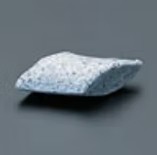
Rosler RF ceramic vibratory media has a bulk density of approximately 95 lbs per cubic foot with the ability to polish and clean parts. RF is an excellent media choice when parts are more delicate and will impinge from higher density media. Rosler RF media has low wear properties, provides “very low cut” and will leave a “very fine” finish. Rosler offers a wide range of ceramic media composition, shapes, and size variations to accommodate many process applications. Manufactured to DIN ISO 9001 standards, Rosler ceramic media will produce repeatable results process after process.
RF Composition
Make a Selection
$0.00
Description
Ceramic media is primarily used in vibratory finishing applications to smooth surface roughness, Break edge radius, reduce sharpness, blend tooling paths, polish, deburr, and many other useful finishing applications. Ceramic vibratory media can also be referred to as stones or chips, however, the terminology refers to pre-formed of random shape pieces of ceramic with different abrasive characteristics. Abrasive characteristics vary as different compositions are engineered to produce various luster and roughness results. Ceramic densities are altered to accommodate process pressures as well as part material considerations. Vibratory media can be classified as “no cut”, “low cut”, “medium cut” , fast cut”, “very fast cut”, and “ultra fast cut”. Each classification of media will produce a different final finish from polished to coarse per the respective “cut” rate.
Specifications
| Shape | Ellipse Angle Cut (ES) |
|---|---|
| mm | 15/15/06 |
| in | 5/8×5/8×1/4 |
| Composition | RF |
| Density (lbs/ft) (approx.) | 95 |
| Finish | Very Fine |
| Cut | Very Low |
Typical Applications: Polishing
Reference Images

Rosler RF ceramic vibratory media has a bulk density of approximately 95 lbs per cubic foot with the ability to polish and clean parts. RF is an excellent media choice when parts are more delicate and will impinge from higher density media. Rosler RF media has low wear properties, provides “very low cut” and will leave a “very fine” finish. Rosler offers a wide range of ceramic media composition, shapes, and size variations to accommodate many process applications. Manufactured to DIN ISO 9001 standards, Rosler ceramic media will produce repeatable results process after process.
RF Composition
Make a Selection
$0.00
Description
Ceramic media is primarily used in vibratory finishing applications to smooth surface roughness, Break edge radius, reduce sharpness, blend tooling paths, polish, deburr, and many other useful finishing applications. Ceramic vibratory media can also be referred to as stones or chips, however, the terminology refers to pre-formed of random shape pieces of ceramic with different abrasive characteristics. Abrasive characteristics vary as different compositions are engineered to produce various luster and roughness results. Ceramic densities are altered to accommodate process pressures as well as part material considerations. Vibratory media can be classified as “no cut”, “low cut”, “medium cut” , fast cut”, “very fast cut”, and “ultra fast cut”. Each classification of media will produce a different final finish from polished to coarse per the respective “cut” rate.
Specifications
| Shape | Ellipse Angle Cut (ES) |
|---|---|
| mm | 20/20/10 |
| in | 3/4×3/4×3/8 |
| Composition | RF |
| Density (lbs/ft) (approx.) | 95 |
| Finish | Very Fine |
| Cut | Very Low |
Typical Applications: Polishing
Reference Images

Rosler RF ceramic vibratory media has a bulk density of approximately 95 lbs per cubic foot with the ability to polish and clean parts. RF is an excellent media choice when parts are more delicate and will impinge from higher density media. Rosler RF media has low wear properties, provides “very low cut” and will leave a “very fine” finish. Rosler offers a wide range of ceramic media composition, shapes, and size variations to accommodate many process applications. Manufactured to DIN ISO 9001 standards, Rosler ceramic media will produce repeatable results process after process.
RF Composition
Make a Selection
$0.00
Description
Ceramic media is primarily used in vibratory finishing applications to smooth surface roughness, Break edge radius, reduce sharpness, blend tooling paths, polish, deburr, and many other useful finishing applications. Ceramic vibratory media can also be referred to as stones or chips, however, the terminology refers to pre-formed of random shape pieces of ceramic with different abrasive characteristics. Abrasive characteristics vary as different compositions are engineered to produce various luster and roughness results. Ceramic densities are altered to accommodate process pressures as well as part material considerations. Vibratory media can be classified as “no cut”, “low cut”, “medium cut” , fast cut”, “very fast cut”, and “ultra fast cut”. Each classification of media will produce a different final finish from polished to coarse per the respective “cut” rate.
Specifications
| Shape | Tristar Straight Cut (DZ) |
|---|---|
| mm | 04/04 |
| in | 5/32×5/32 |
| Composition | RF |
| Density (lbs/ft) (approx.) | 95 |
| Finish | Very Fine |
| Cut | Very Low |
Typical Applications: Polishing
Reference Images

Rosler RF ceramic vibratory media has a bulk density of approximately 95 lbs per cubic foot with the ability to polish and clean parts. RF is an excellent media choice when parts are more delicate and will impinge from higher density media. Rosler RF media has low wear properties, provides “very low cut” and will leave a “very fine” finish. Rosler offers a wide range of ceramic media composition, shapes, and size variations to accommodate many process applications. Manufactured to DIN ISO 9001 standards, Rosler ceramic media will produce repeatable results process after process.
RF Composition
Make a Selection
$0.00
Description
Ceramic media is primarily used in vibratory finishing applications to smooth surface roughness, Break edge radius, reduce sharpness, blend tooling paths, polish, deburr, and many other useful finishing applications. Ceramic vibratory media can also be referred to as stones or chips, however, the terminology refers to pre-formed of random shape pieces of ceramic with different abrasive characteristics. Abrasive characteristics vary as different compositions are engineered to produce various luster and roughness results. Ceramic densities are altered to accommodate process pressures as well as part material considerations. Vibratory media can be classified as “no cut”, “low cut”, “medium cut” , fast cut”, “very fast cut”, and “ultra fast cut”. Each classification of media will produce a different final finish from polished to coarse per the respective “cut” rate.
Specifications
| Shape | Tristar Straight Cut (DZ) |
|---|---|
| mm | 06/06 |
| in | 1/4×1/4 |
| Composition | RF |
| Density (lbs/ft) (approx.) | 95 |
| Finish | Very Fine |
| Cut | Very Low |
Typical Applications: Polishing
Reference Images
Rosler RF ceramic vibratory media has a bulk density of approximately 95 lbs per cubic foot with the ability to polish and clean parts. RF is an excellent media choice when parts are more delicate and will impinge from higher density media. Rosler RF media has low wear properties, provides “very low cut” and will leave a “very fine” finish. Rosler offers a wide range of ceramic media composition, shapes, and size variations to accommodate many process applications. Manufactured to DIN ISO 9001 standards, Rosler ceramic media will produce repeatable results process after process.
RF Composition
Make a Selection
$0.00
Description
Ceramic media is primarily used in vibratory finishing applications to smooth surface roughness, Break edge radius, reduce sharpness, blend tooling paths, polish, deburr, and many other useful finishing applications. Ceramic vibratory media can also be referred to as stones or chips, however, the terminology refers to pre-formed of random shape pieces of ceramic with different abrasive characteristics. Abrasive characteristics vary as different compositions are engineered to produce various luster and roughness results. Ceramic densities are altered to accommodate process pressures as well as part material considerations. Vibratory media can be classified as “no cut”, “low cut”, “medium cut” , fast cut”, “very fast cut”, and “ultra fast cut”. Each classification of media will produce a different final finish from polished to coarse per the respective “cut” rate.
Specifications
| Shape | Tristar Straight Cut (DZ) |
|---|---|
| mm | 10/10 |
| in | 3/8×3/8 |
| Composition | RF |
| Density (lbs/ft) (approx.) | 95 |
| Finish | Very Fine |
| Cut | Very Low |
Typical Applications: Polishing
Reference Images